Perhaps everyone has heard of portfolios for designers, artists, journalists, or photographers, for example. With these examples, everything seems clear. But in fact, technical specialists not only can, but should have their own portfolio. And the more qualitative and informative it is, the more likely you are to get a good one-off order. Or, if you're lucky, get a permanent job with a decent salary.
So in this guide, we're going to talk about what a developer's portfolio should contain and what you should follow when creating it. Of course, we will also pay attention to the mistakes that beginners often make when creating a portfolio, because at first glance it is not clear what should be in it. After all, how can you create the right impression of yourself using code? In fact, you can, and below we will show you how to do it. Juniors and beginners in general are advised to read to the end, it will be very useful for you.
What is the meaning of a developer portfolio
First of all, thanks to the portfolio, you show that you not only have theoretical skills and knowledge, but also already have experience in applying them in practice. In this regard, it is important not to confuse a portfolio with a CV, because the latter is a simple description of your skills, courses, education, where you have worked, information about you as a person, etc. A portfolio has a completely different function - to show what you can do and how well you fit the position and functions you are applying for.
If your portfolio is professionally created, it becomes part of your personal brand and will be an additional source of attracting attention from HR. It will immediately show what you can do, reveal you as a real ace in a certain field, which will not only advertise you, but also save time during the interview. Remember the simple rule: there are many juniors, but the position and recruiter are in a single copy.
Another task of the portfolio is to emphasise the uniqueness of you, because usually everyone writes about the same thing in the list of skills and abilities, but a clear example is a way to stand out. Don't forget to add links to your portfolio on all your social media pages, forums, and any other platforms where you are active and present, because just creating it is not enough, it is also important to drive traffic to it.
Is it worth making a portfolio presentation
It is not advisable for a developer. Below, we will tell you what exactly should be in a developer's portfolio, and you will understand that it is virtually impossible to reveal your potential as a specialist within the framework of slides or images in a presentation.
Yes, it can play a role, but there is no easy way around it. Presentations are good for designers or artists, but not for developers.
What should be in a developer's portfolio first
Based on the tasks we discussed above, we can also determine what exactly should be in your portfolio. First of all, of course, it is a brief information about you, what exactly you specialise in. You should also include your desired position, add (if you have any) feedback from clients, mentions of you in publications, in short, everything that can be described as a kind of "third force influence".
And, of course, contact information, because we want to be found. Everything should be brief but clear.
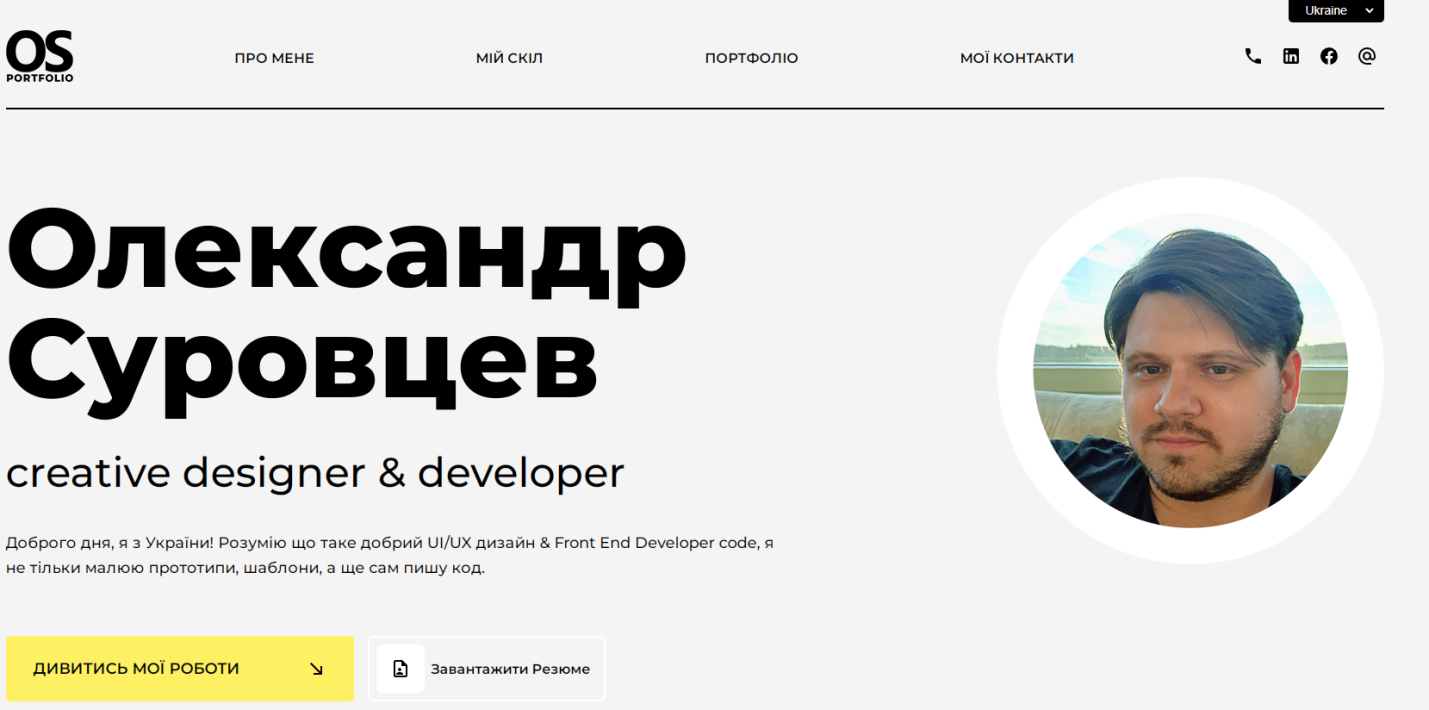
Be sure to describe your skills, interests, goals (for example, what you want to achieve in your profession and life), preferably using keywords and phrases that will help potential employers find you. Alternatively, you can use a bulleted list for this purpose - visibility has never hurt anyone.
Describe your project
This is perhaps the most important part of a developer's portfolio, and it should be treated with the utmost responsibility. First of all, choose not the project that was as easy and simple as possible, but the one that required maximum knowledge and effort from you. After all, it is this kind of experience that will characterise you as a specialist.
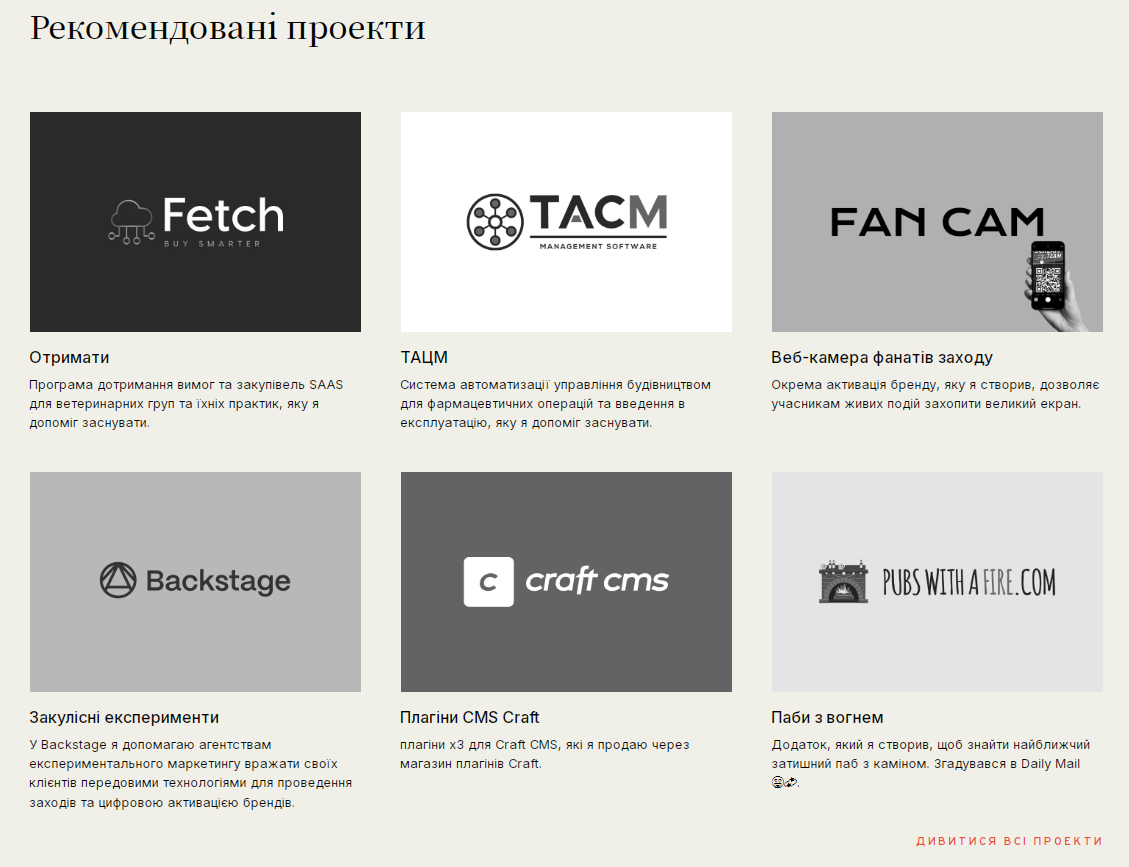
For example, you are an experienced developer. In this case, it is advisable to demonstrate moderately complex code that can be explained in detail. Or, for example, have you been involved in coding a complex project? Explain how your code improved the platform.
If you're a beginner, then demonstrate an unusual example, i.e. code that requires explanation and is still functional. Employers usually want to see a combination of non-triviality, logic, and good practice.
In presenting the project, follow the STAR algorithm, which has the following components:
- Situation
- Task
- Action
- Result
Add as much visual material as possible, i.e. screenshots, graphs, tables, functions, statistics. This helps to quickly understand your case and evaluate it.
Show the full sequence of its implementation in the project, or as they say, the flow of work. When you "know" the full spectrum of development, it immediately gives you a plus in the eyes of the recruiter. An attentive and painstaking approach is immediately noticeable and highly appreciated."
What else to include in your portfolio
Also, be sure to indicate what technologies you have, as well as how you applied them in a particular project and why. The project in the portfolio should be relevant to the job you are applying for.
There should be links to the mockup, code, description, and published version of the app or website, etc. The projects themselves should be selected so that they include the technologies and skills specified in the job posting. For example, if the employer has indicated in the job posting that they need a developer with knowledge of (for example) Less, then at least one of your projects should use this preprocessor. Confidently show what you can do in what the employer needs!
Step-by-step plan for creating a portfolio
Now let's move on to what you need to do to create a good portfolio, even if you have never had such experience.
- First, determine the specialisation to which your portfolio will be dedicated. This will immediately determine the specifics of the projects that will be presented in it.
- Then describe the project, following the above criteria. Each project should be designed so that it can be easily evaluated and launched. To do this, the Readme file must contain the following fragments: a brief description, technologies, launch instructions, as well as a demo version of the project or product, or at least screenshots.
- Create your GitHub profile. Specify your location, expectations, and skills there. Beware, a common misconception: you might think that adding a fancy design or animation to your portfolio will increase your chances of getting hired. However, if the design or animation is confusing, distracting, or unnecessary, it can reflect poorly on you.
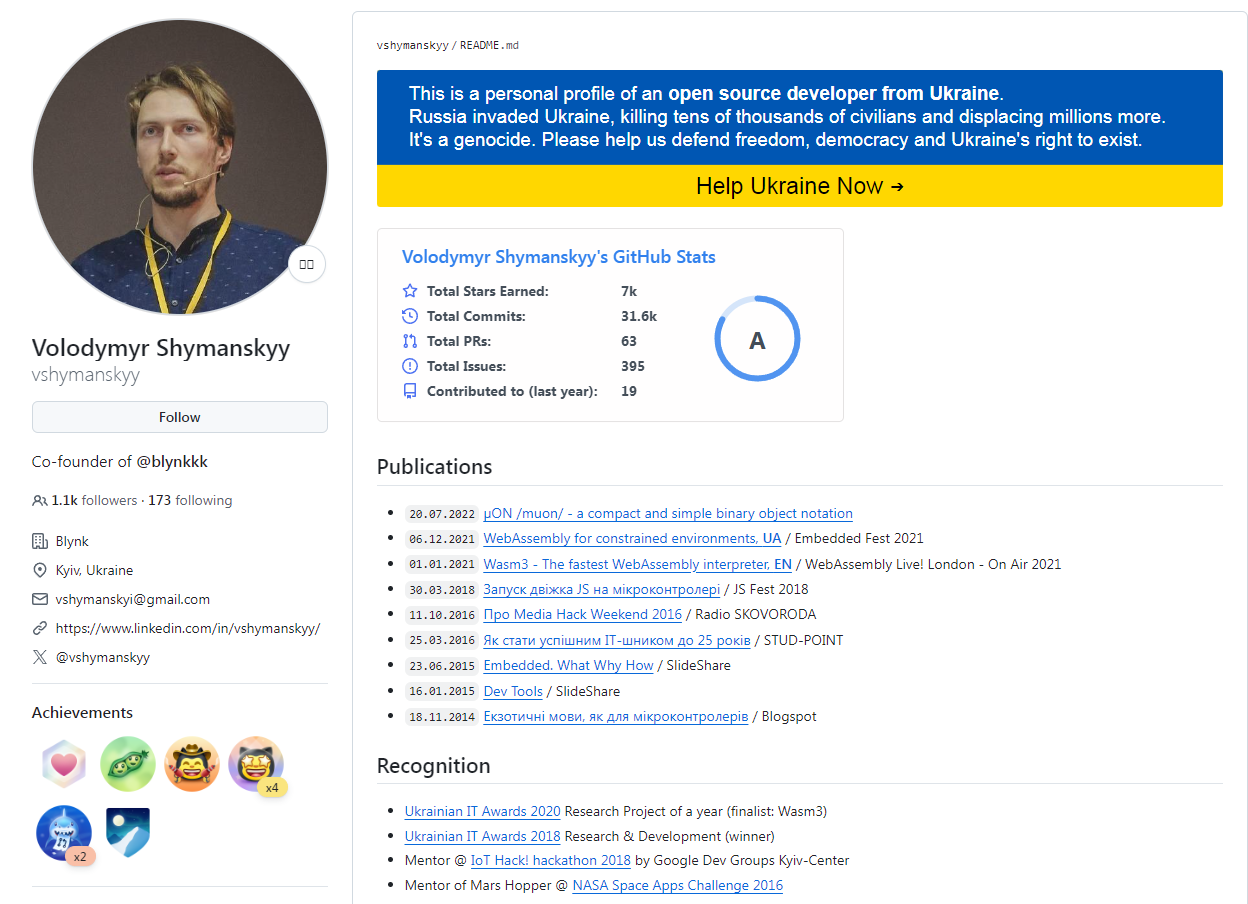
So, it's best to go for a simple and minimalist design with links to your best projects in different areas. Also, don't forget to update your portfolio regularly. You can see an example of a simple website in the screenshot. As you can see, everything is concise but informative at the same time.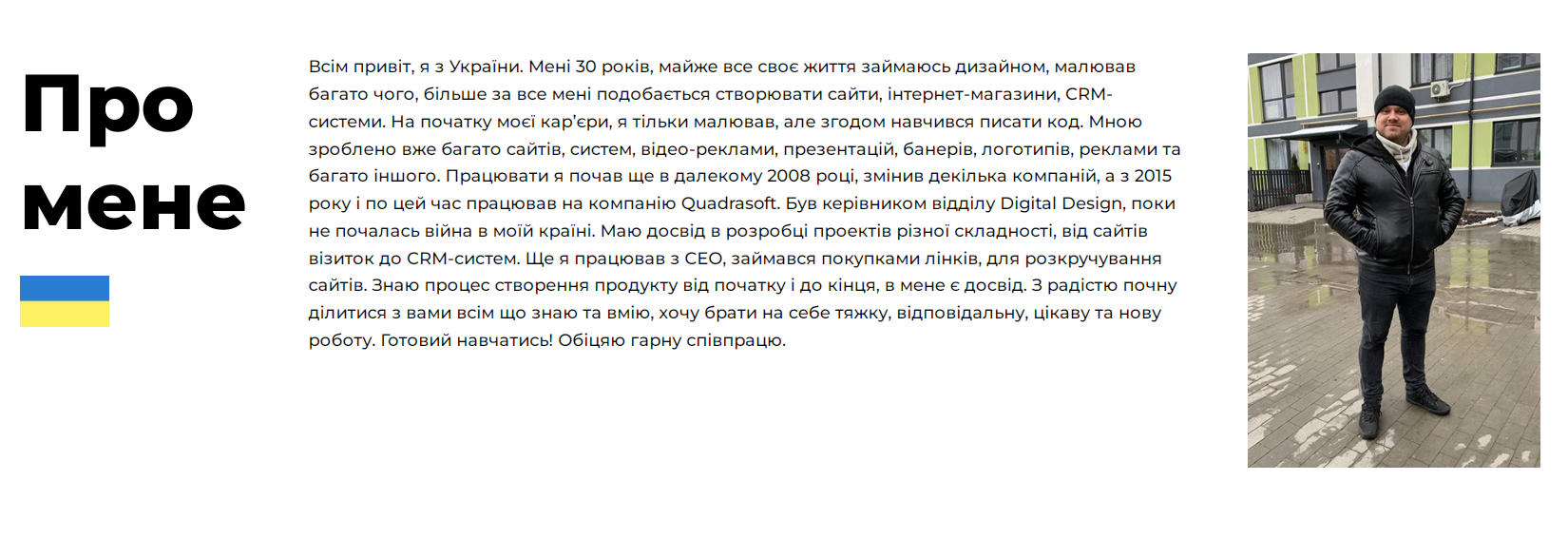
In addition to keeping it up-to-date, this will be an additional sign for HR that you are quite careful about your reputation and perception of you as a specialist, which will serve as an additional point in your favour.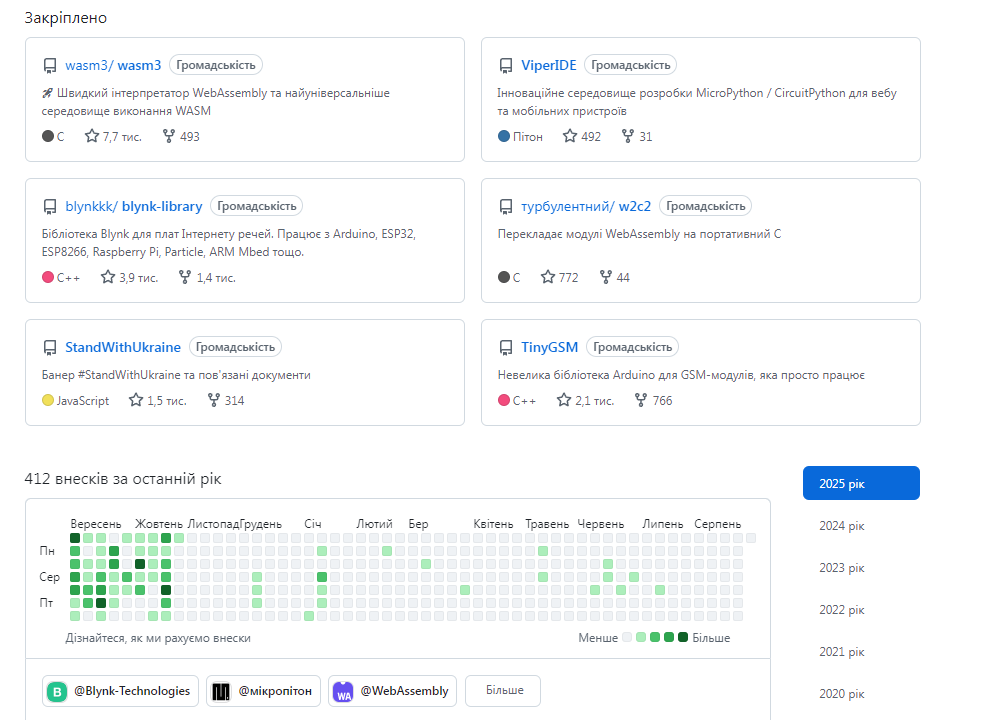
What not to add to your portfolio
- Of course, first of all, leave out questionable or unsuccessful work. Don't add projects if you're not even a little unsure about them. Show only the most successful and interesting ones, because an HR specialist doesn't have much time to review your portfolio, and there are many competitors. If you are currently working on this project, be sure to indicate this as well."
- Also, other people's projects are an absolute taboo. Don't try to take credit for other people's achievements. It's not only a matter of integrity, but also the fact that you won't be able to explain why everything is done this way and not otherwise. If you're referencing a large collaborative project and you didn't do some of the code or design, please write about it in the comments. It's a good idea to include links to the code and commits you wrote. That's why you can't add too many projects at once. It's better to choose some of your strongest works than to show how much you've done. After all, HR will be primarily interested in your qualifications in a particular area and profile.
- Projects that are not relevant. If you have previously worked on another stack or in a language that is not applicable, do not add examples of such work. However, you do not need to give up your experience. You can leave a link to a separate portfolio in that language. This can be your advantage for a future employer during the next selection process.
Some tips for beginners
You should avoid creating common things that can be seen in most portfolios (for example, a simple note-taking app or some kind of calculator). Do something you enjoy creating, but at the same time something that a potential employer (or even people in general) will find useful (e.g. certain landing pages or apps, etc.)
Remember that projects have a certain specialisation, and that comes with both pros and cons. Let's briefly go through the main types.
For example, commercial projects are usually highly valued, except for advertising projects. In advertising projects, high quality code is usually not required, so this will be a bad argument.
Experience in hackathons will show your ability to work under stress and in a short time. However, if you have no experience other than hackathons, you may be "suspected" of being in the habit of rushing everything to meet a deadline with a loss of quality.
As for pet projects, its advantages (openness, no strict deadlines, format or technology restrictions) also lead to its disadvantages. Usually, if you have no other experience, you may be inferior in the eyes of the recruiter to another candidate. Therefore, be careful about including such projects in your portfolio unless they have led to a lot of interest in you.
And finally, an important tip. If you have participated in an open-source project, be sure to mention it. This is a very good way for a beginner developer to make a name for themselves, as it is not a prerequisite, but it will be an important plus in your favour.