
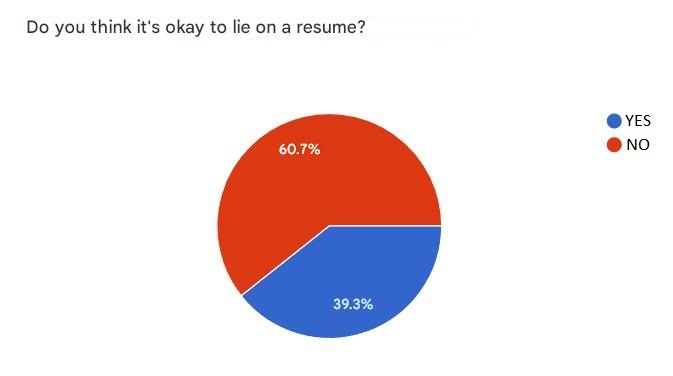
The question of whether to lie on a resume has been debated for decades. However, priorities are beginning to shift over time, and our survey results confirm this. Out of nearly 200 respondents, the vast majority consider lying on a resume unacceptable.
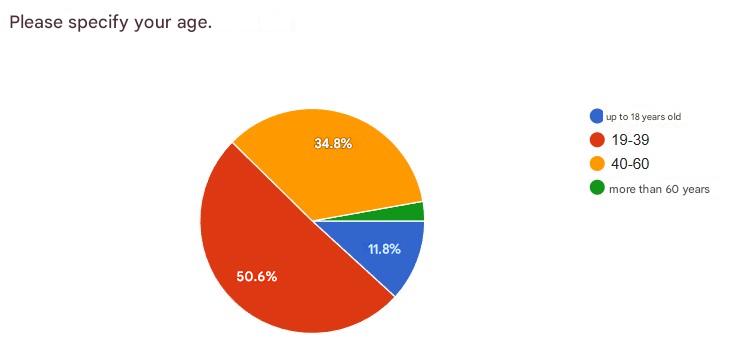
Since the survey participants were fairly evenly distributed by age, the data allowed us to see that respondents under 18 and over 40 are the most inclined to lie.
Why is this the case? Let’s break it down.
In reality, the "under 18" and "40+" categories are, in a sense, "victims of ageism." To secure employment, the former feel pressured to embellish their experience, while the latter feel forced to mask their age. It has become common for employers—even for entry-level roles—to traditionally demand "at least some" experience, pushing young candidates to inflate their resumes. For older candidates, hiding their age is often a forced necessity.
Younger people may also experiment with deception out of a certain youthful thrill: "What if I try this? Will I get caught? Who’s the smartest person in the room?" This is further fueled by the fact that there are plenty of entry-level openings; if one employer doesn't work out, there is always another. Meanwhile, seasoned professionals who have faced rejections due to their age or "unsuitable" (from the employer's perspective) experience resort to lying simply to get a foot in the door. With fewer offers for the 45+ demographic, they see it as a vital necessity to overcome employer bias, having learned from experience that their honest background is often undervalued.
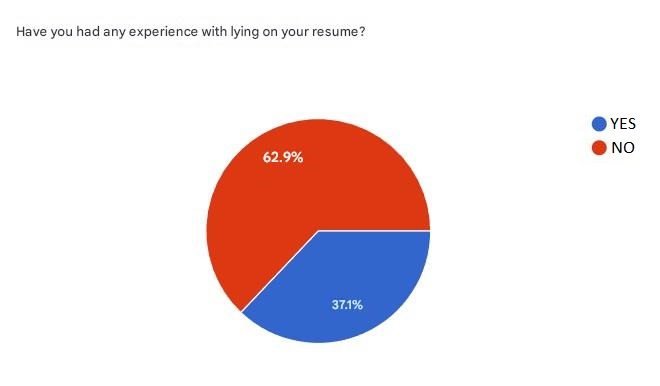
Nevertheless, being prepared to lie and actually lying are two different things. Two-thirds of our participants have never actually lied on a resume.
This is the right approach, as lying is a mentally taxing and burdensome construct for the human brain. One must constantly remember where and how they lied to avoid being caught. Keeping track of "what to say and what to hide" is exhausting. Furthermore, you risk being exposed through follow-up questions or skill tests, which can be deeply embarrassing.
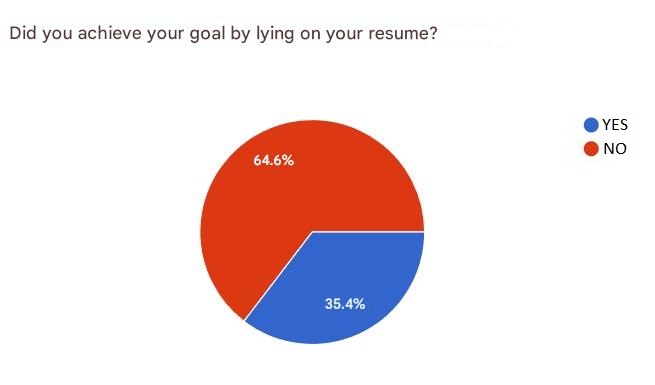
Most importantly, those who did practice deception failed to achieve their desired results. Their efforts were in vain. For many, it likely served as a "lesson learned": it's simply not worth it.
Ultimately, lying on a resume simply isn't worth it.
You might choose to omit your age—which is perfectly acceptable and not a lie at all. You are not responsible for a potential employer's ageism. On the other hand, you could choose to include it to avoid wasting time on calls from recruiters who will inevitably ask about your age and reject you on the spot, sparing you from false hopes.
It is also acceptable to list a job title that reflects your actual responsibilities rather than what was written in your official employment record. For example, a friend of mine effectively performed her manager’s duties for a year while she was on maternity leave. She wasn't officially promoted because her supervisor intended to return as soon as possible. However, when my friend started looking for a management role, I advised her to list that experience in her resume because it was a lived reality, even if it wasn't "on paper."
Here is another useful tip: your truth can be mistaken for a lie if you act suspiciously. Fidgeting, getting nervous, or confusing dates, case studies, and names often happens when you aren’t properly prepared. Perhaps you added your latest role to your resume, wrote a quick summary, and considered your preparation finished.
This creates a paradox: your resume contains nothing but the truth, yet as you discuss your real experience, you can feel the recruiter’s skepticism. They double-check details and grill you on how you handled specific work situations. You were already nervous, and now you start to stumble over details you thought you knew.
The result: Rejection.
Could this have been avoided? Absolutely. Let’s look at the steps:
Analyze the job description and your resume: Find the common ground and identify specific points to highlight during the interview.
Research the company: Browse their website and social media to form your own impression of who they are looking for.
Refine your "elevator pitch": Prepare a concise answer to the "Tell me about yourself" question.
Align your pitch with the employer's needs: Adjust your self-presentation as necessary.
Practice aloud: Rehearse your updated self-presentation to build confidence for the interview.
By doing this, you won't have to struggle to convince the HR manager that your achievements are real.
In conclusion, lying on a resume is a tricky and labor-intensive game. It is far more effective to craft a stellar resume and thoroughly prepare for the conversation. This approach is more productive and allows you to walk into the room feeling like a professional, not a fraud.