
Over the past few years, the term "toxicity" has ceased to be applied only to hazardous substances. Now, for many people, it represents unpleasant colleagues and acquaintances rather than chemical poisons. For example, in 2018, "toxicity" was named the Oxford Dictionary's Word of the Year. According to the same dictionary, toxicity is defined as the ability of a person to be harmful or unpleasant.
A toxic person in a team "poisons" the atmosphere. It should be noted right away that completely non-toxic people are rare. Everyone has been toxic: we can say the wrong thing to a person, violate their boundaries, or even cause moral injury without realising it. But there are those who constantly violate the norms and rules of behaviour, causing discomfort to others, even if it's remote work from home.
What are the types of toxicity
Psychologist Stephen Karpman once proposed a model of interaction for people. There are three roles in the Karpman triangle that people play in different situations: aggressor, victim, and rescuer. The radical manifestation of each of these roles is a type of toxic behaviour:
- Aggressors can manifest themselves not only through attacks, but also through unconstructive criticism and unjustified remarks;
- Victims constantly demand attention and pity. These people feel guilty with or without reason, try to justify themselves and fix their "mistakes";
- Saviours are very caring and overprotective people who seek to give advice to any person with or without reason. Employee morale, work efficiency, and the overall company climate suffer more than you might think at first glance.
The following things are common to a toxic team:
- Emotional burnout. Constant exposure to criticism, sarcasm, or stress drains anyone psychologically. This leads to a feeling of exhaustion and lack of energy.
- Decreased productivity. Guilt, conflict, and stress begin to distract people. Instead of being productive, employees are more concerned with self-defence or recovering from unpleasant conversations. Such colleagues often act in isolation, encouraging others to compete or disagree. As a result, the sense of team unity is destroyed. No one wants to work in an atmosphere of constant stress. Good employees simply leave for a place where their efforts will be appreciated and the workplace will be more comfortable.
Imagine a situation where there is a person in the team who is constantly late, avoids completing tasks, but is constantly critical of others. His presence literally paralyses the work.
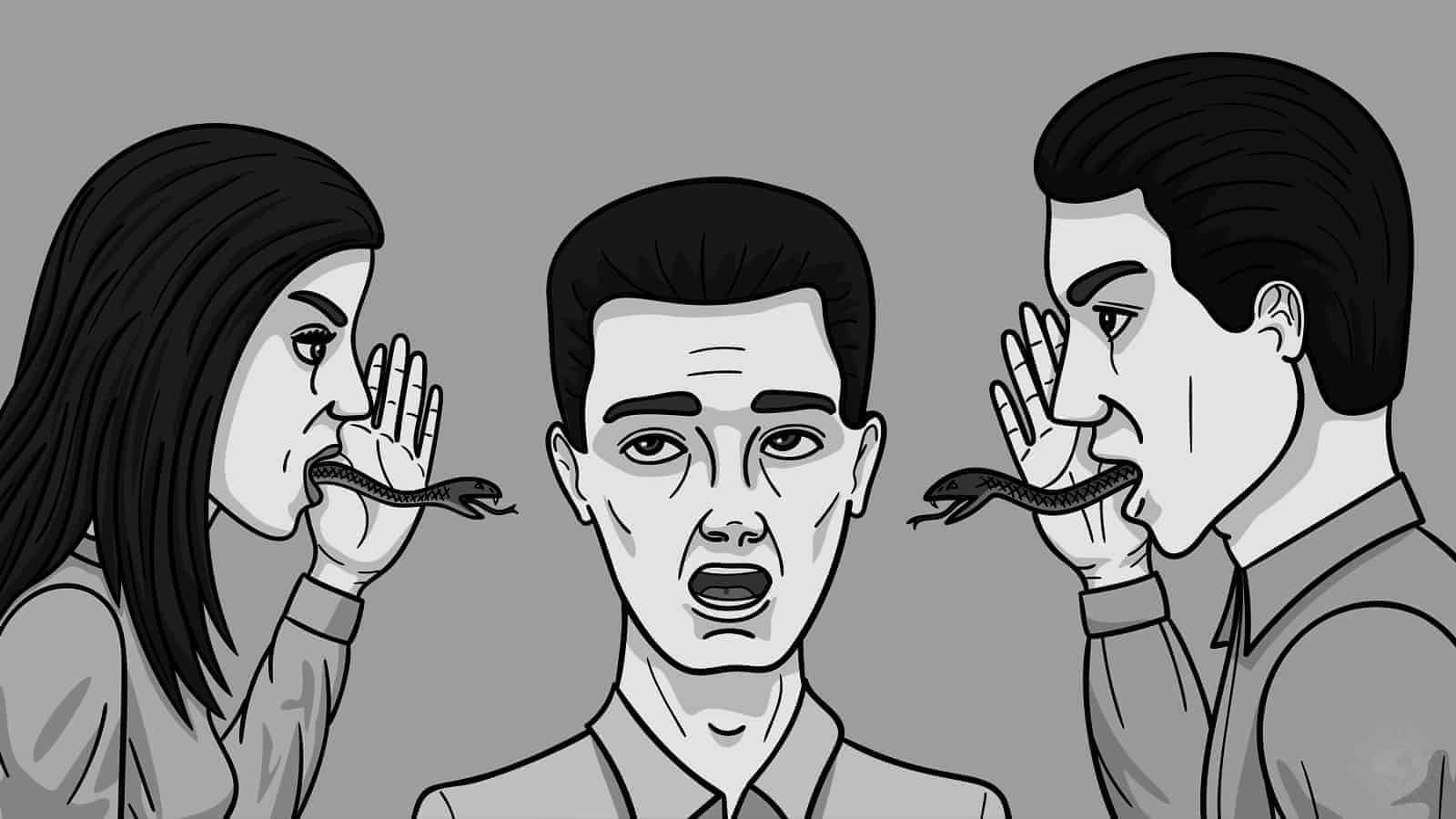
Working time is spent not so much on solving problems, but on discussing problems. Other team members begin to feel injustice. Especially those who are trying or want to grow professionally suffer. As a result, normal hybrid work is simply impossible for data analysts.
Is it possible to get "infected" with toxicity?
His behaviour can be perceived as a norm and an example to follow: "If Peter Tarasovich behaves like this and comments on the work of my colleagues like this, then I will do the same. He will take me as an equal, and then, you never know, he will promote me!"

Another twist is possible. For example, an organisation has a person in a leadership position who violates other people's personal boundaries, criticises unconstructively, scolds for no reason, or gives unsolicited advice. Then employees may have two reactions:
- What is this person doing in our team?
- What am I doing in the team with this person?
The search for answers to these questions provokes confusion, misunderstanding, and even conflict situations, as a result of which even remote work for IT specialists can turn into a showdown.
I'm in a toxic team, what should I do?
Suppose a new employee joins the team and sees toxic communication, unreasonable criticism, and aggression towards colleagues and subordinates. An inexperienced person will immediately rush to solve and change something. An experienced leader will look around and try to understand why this culture has formed, who is broadcasting these patterns of behaviour.
It often happens the other way round. Employees try to introduce new principles of communication, values, and culture among their subordinates, although it is necessary to start with the management. First of all, you should honestly answer a number of questions:
- Why did the company form such a culture?
- Why does the company need such a culture?
- Why do employees need it?
- Why should the established culture be changed?
Sometimes it happens that culture seems toxic only to new employees.In fact, it turns out that a company with a high level of cohesion and collectivity has certain defence mechanisms that may seem toxic to a newcomer to any of their actions.

But if it so happens that the team where there are jobs for students online is really toxic, then it is important to understand a few things. Let's start with what you shouldn't do - try to make friends. Communication with a toxic person is constantly hurtful. By agreeing to communicate with such a person, you sign a moral contract in advance that you are ready to endure everything. But there are also certain psychological methods to cope with this, and we'll talk about them below.

One-on-one conversation
If you decide to talk to such a colleague, you don't need to tell the person that they are toxic or that they are unpleasant to you. As soon as you say this, a conflict will immediately arise. And you won't be the one to win it. The "toxic" will only become stronger due to your emotions."
In social psychology, there is a term called "reinforcement. In her psychological book Don't Bark at the Dog, Karen Pryor describes in detail what it is and how toxic people are reinforced by other people's emotions. As soon as you hint that you don't want to communicate with them or that they are harmful to others, it will start right away: "How? Me and harm? Really?" And then tears, insults, and indignation."
Minimising
Often you can see the advice to ignore the "toxic". But how can you ignore, for example, your immediate boss, or a person who works with you in pairs on the same task? That's why it can only work in normal life, but not in a team, even if you work remotely full-time.
But you can minimise contacts. That is, all your communication should be limited to purely work-related issues. As soon as the conversation turns to something personal, immediately change the subject in the style of "Oh, I forgot to say that..." and then some work-related issue. With this approach, they will very soon leave you alone because they will not feel the "return" that toxic people really need like a drug.
Polite and restrained
Another rule of communication is to be polite and neutral. Answer the questions that a toxic person asks you, definitely do not get involved in the discussion, even if it provokes you. Keep your tone of voice even, do not raise your voice.

Yes, we communicate with a "toxic" person at least, but they shouldn't feel that you are avoiding them or afraid of them. Don't get into an argument, be polite, and respond to questions unambiguously. You don't need detailed answers."
And if they deliberately get you into an argument, do your best to avoid it: "Okay, there are different opinions: yours is one, mine is another. If you want, I'll share mine, and you can think about it. I will also think about yours." If the "toxic" person is trying to extract information that they can use against you, always ask why they need to know."
What if I have a toxic boss? Use a few simple techniques:
- Try to analyse what precedes the toxic behaviour of the manager and so you can draw the necessary conclusions - is it the whole thing or are there any triggers.
- Observe his behaviour in dealing with other people: if there is a difference (he behaves with you in one way, with others in another), try again to understand the reason for this attitude.
- As an option, try to change your behaviour, that is, in work matters, act differently, not in the way you and your manager are used to.
- And now the secret weapon - try to predict his reaction or words. The technique of "I know you're going to yell at me now..." tends to disarm and put the person in an uncomfortable position.
Then you can give him constructive feedback, tell him about your feelings and difficulties, using the right moment for this. This can help solve your problems with him."
What if I'm a manager and need to calm down a toxic subordinate?
First, try a personal conversation. You can discuss current affairs in an informal conversation: the employee's successes and failures, what gives him pleasure or causes him frustration. Often, such a conversation is enough to relieve a person's anxiety and calm them down, and consequently change their behaviour. Sometimes you can recommend communication with a psychologist to work through the trauma more deeply.
If this does not help, you can introduce a yellow card rule in the team. And at the beginning of the month, you clearly discuss what is and is not allowed, and give each employee a yellow card. If someone is "toxic" to another, they receive a yellow card from him, and accordingly, part of their bonus goes to the victim."
So, toxic colleagues are unpleasant, but not critical. You can work and interact with them, and eventually even stop their destructive influence on you individually or on the team as a whole. You just need to be balanced and calm.