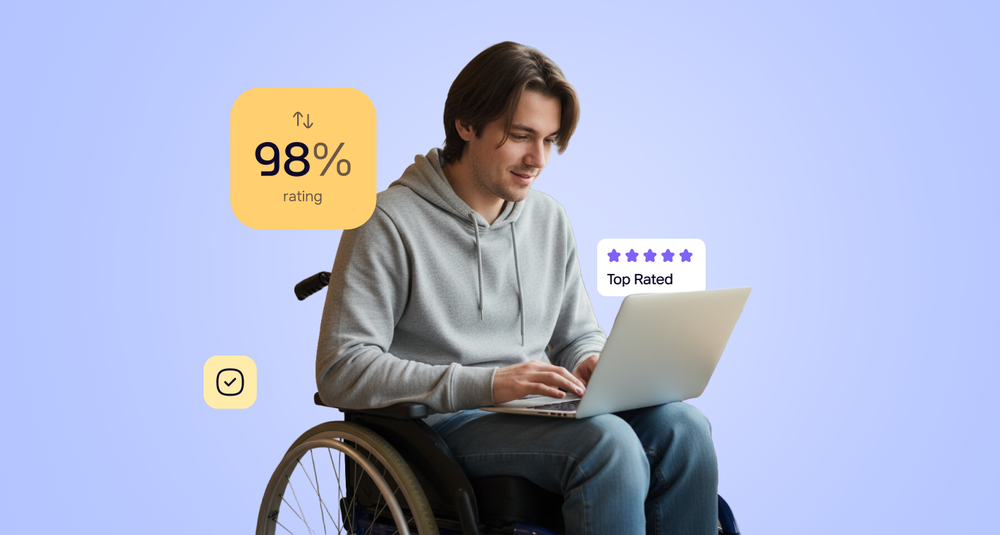
In Europe and the United States, DEI has been a topic of discussion for years. Although President Trump's new team has begun an open fight against this principle, many companies have stated that at their level they will continue to follow the previous course in terms of whether to abandon DEI, as they have seen the benefits of it in practice.
In the corporate environment, the term Diversity-Equity-Inclusion describes the principle of team organisation, where the team and the business are ready to accept any person regardless of gender, age, nationality, health status and other characteristics. Only the professional qualities of the employee matter, not any prejudices of the employer. Even if we consider remote work for IT specialists, these principles also work, although to a lesser extent, mainly at the hiring stage.
What exactly does the implementation of DEI principles help with
To begin with, TSQ Consulting experts believe that diversity is incorrectly defined only through gender, age, nationality and other similar criteria. The company's material describes a Harvard Business Review experiment where diverse teams performed tasks. It turned out that gender and ethnicity did not affect the success of the participants.
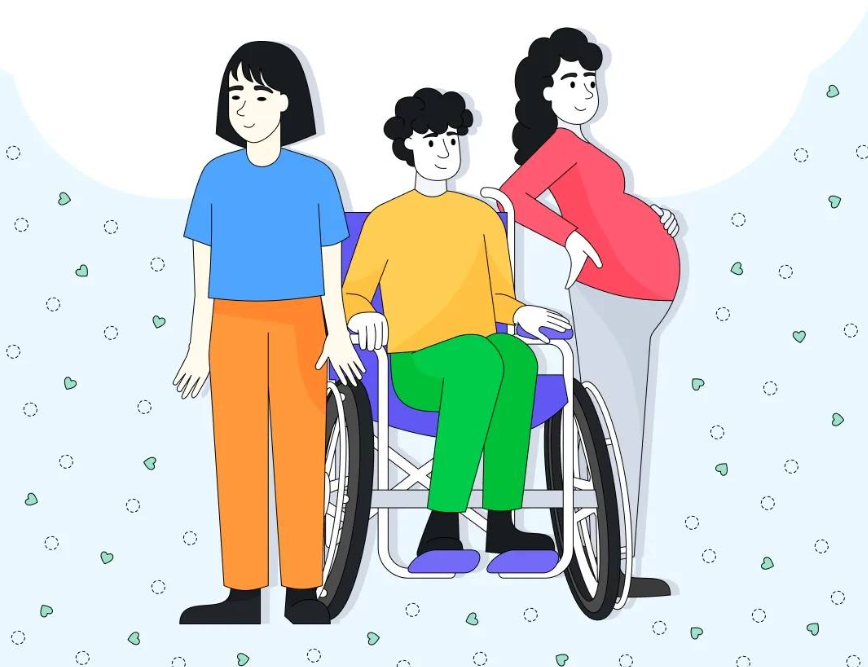
In simple terms, it means the following: people with different education, experience, who have lived in different countries and cultures, bring their unique perspective to a joint project. This ultimately contributed to greater productivity."
In general, the more diverse the team is, the better it will work, paradoxically. It is important to understand that our diversity is our strength. It is thanks to the difference in opinions and approaches that unique ideas and projects emerge that make an incredible contribution to the development of the company and society as a whole. That's why remote work jobs should be available to everyone who meets the professional requirements.
There are studies that examine the impact of DEI on other aspects of business. Below are some examples of how DEI principles have helped companies in their business, according to company-specific studies:
- Generally, there was a significant increase in the number of cases where innovative decisions were made. - When solving problems, they began to look at the problem from different perspectives, reduce bias, and make more informed decisions - a study by Cloverpop, a platform for optimising decision-making.
- They began to attract candidates more often, as 76% of the candidates surveyed reported that a diverse team is an important factor for them when evaluating companies and job offers - a study by Glassdoor, a job search service.
Of course, we can say that much of this is true for Western societies, because, for example, in the United States, there are whites, blacks, Latinos and Asians, supporters of various genders, etc. In fact, this is not true, we also have a lot of prejudice. Here is a specific example, a situation that is often used as a test for bias.
A father and son go fishing and get into an accident. The father is killed, and the son is taken to hospital with serious injuries. The young man is put on the table, a surgeon comes over and says, "I can't operate on him, he's my son." What's the matter?"
Often people start thinking and looking for some kind of hitch, but in fact, everything is simple. This is a vivid example of stereotypes and restrictions that are created artificially and prevent us from making the right decisions. And now let's go through the individual components in relation to their relationship to teams.
Diversity
Diversity is not even about individuals, because if you call someone in your team "special", for example, it means that the rest are supposedly "normal". For example, you say that we have a team of diverse people - for example, Maria is a feminist, and Ravil is a Crimean Tatar and a Muslim. At the same time, you don't mention Orest, Taras, Kateryna, Olena and Valentyna because they are "normal" for you, even though they have the same online part-time jobs as the ones you mentioned. This is where the problem lies.
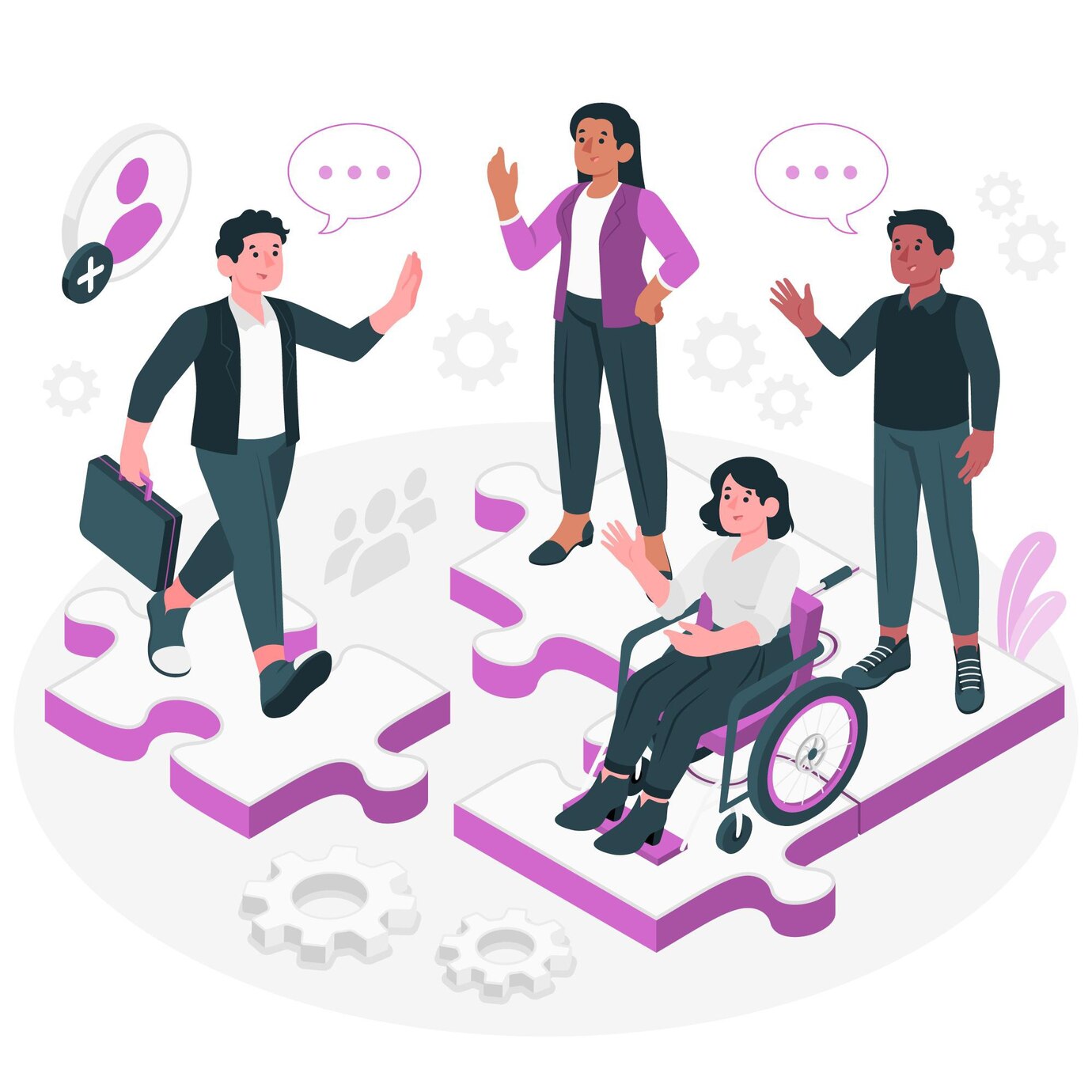
Diversity manifests itself exclusively as a quality of teams and organisations and is measured on the basis of the collective whole. That is, when we talk about diversity - from appearance to opinions, likes and dislikes and identity - we are talking about the team as a whole, for example, you have passionate political fans of different parties in your team. The same can be true of anything else, from skin colour to musical preferences.
So when you call other people "diverse" you are literally singling them out as belonging to non-dominant or historically less privileged groups in our society. This only makes things worse. Instead, diversity is about the differences between people in your individual teams, corporation or company, etc.
Inclusivity
While diversity at work is about the existence of differences in the team, inclusivity is about how everyone in the team feels valued and needed, that is, an essential part of the whole, not only used but respected and cared for. For example, "diversity" as a characteristic of a workplace means that there may be people who practice their religious rituals during the day (like Ravil, the Tatar in our example). Inclusiveness means creating a space for people to do so, such as a separate room. By creating this space, we show people that they are valued and encourage them to bring more of themselves to their respective positions. If, for example, we have a young team, we can provide them with a room where they can play video games during a break, etc. If it is a remote job with full-time employment, you can meet people and give them individual time for their personal needs.
Equality
Although the words "fairness" and "equality" are often used interchangeably, they are still very different things, and we're going to make that clear. But when we talk about fair treatment, it means that we focus on individual needs. For example, someone needs a different design of keyboard or mouse - why not give it to them?

That is, if a candidate comes to you who suits you in all respects, but, for example, there is one problem - he is limited in mobility and moves in a wheelchair. If this is the only problem, then you can think about how to organise a convenient workplace for him or her, or you can consider remote employment for a programmer.
Or, for example, you promise a flexible work schedule. So, if one employee needs to pick up a child from kindergarten at 2 pm and another from school at 3 pm, you need to think about how to organise work so that it is not stressful for anyone and the children can be picked up. Maybe you can even arrange a children's room somewhere near the office, where children can sit and play while their parents finish work. This is a manifestation of equality."
A classic example of equality is, for example, when everyone receives a certain number of T-shirts and certain sizes as merchandise. But in order for equality to be observed, first of all, collect their sizes from employees. Better yet, conduct a survey to find out what kind of merchandise your colleagues would like to have. Maybe it would be better to have badges or cups, and they don't need T-shirts.
The DEI principle in hiring employees
As we have already found out, you have to approach working with people in a way that takes into account their needs and is not guided by stereotypes. That is, when you interview a candidate, do not allow yourself to immediately label him or her.
For example, a candidate says that he or she graduated from a university with a degree in the humanities. And immediately banish the thought "oh, I'm not good at maths" that often accompanies graduates of humanities universities. A person can be as good at mathematics as you are, it's just that at the time of admission they had such interests. Focus on professional qualities, because you are hiring a person, not "driving" them through a competition of your sympathies.
Or, for example, a young, beautiful unmarried girl wants to work for us. You don't have to immediately put an end to her "soon to go on maternity leave", maybe she doesn't want children at all, at least not now. You should focus on how the person is able to prove themselves in the position they are applying for.
There should also be no "bonuses", for example, the candidate once worked for a person you know well, and therefore the candidate themselves automatically become good. It's best to evaluate professional qualities in points, and then determine the winners.
Conclusions
It's time to sum up the results. To put it simply: a company where any employee, regardless of gender, orientation or background, can apply for the same working conditions and has equal chances of being hired is much more in line with the DEI principles than a company where all the declared diversity is reduced to training, as is unfortunately often the case.
When DEI is applied correctly, a company's operational performance can improve. Employees will interact more with each other, understand the structure of work, and make more balanced, correct decisions. On the contrary, when there is some kind of discrimination or inequality, people are more likely to experience stress and burnout, which does not help the work. That is why, if we want to have a qualified and "healthy" team, such principles should be fundamental.