Today, the topic of artificial intelligence is probably permeated in all spheres of life. However, we will not talk about the likelihood of the Terminator universe repeating itself, but rather about what can be useful today from various versions of AI presented by manufacturers.
Specifically, we will talk about tools for testers and developers. Both areas are experiencing rapid development of AI technologies, which allows considering remote employment options for programmers who actively use artificial intelligence.
Why artificial intelligence is relevant for testers
Machine learning, for example, can identify patterns and predict future trends. We'll expand on this topic a bit later.
Artificial intelligence can greatly help in customising and improving the reliability of results, reducing the dependence on manual testing, which in the long run leads to greater efficiency, transparency, and speed in automating this process. And, accordingly, now the work for online students in the field of testing no longer looks like a fantasy.
Software testing allows you to identify inconsistencies with the expected results in the behaviour of the system, so that users of a resource or a program rarely encounter so-called bugs. But no one has cancelled the tester's mistake or inattention, and then the bug says to someone "hello, long time no see!". It's an unpleasant story, especially if the developers have been paid a lot of money.
This is where AI testing can be a kind of digital helping hand. Since it does not get tired, burn out, or lose efficiency in the late afternoon, it can perform a very large amount of work, and faster than a human. This is how the "machine" improves our thinking and helps us in everyday tasks.
Can AI be really applied in testing?
There are numerous examples of practical application of AI in the work of testers. One of them is to automate the interaction with user interfaces. Let's say we needed to check how our user interacts with different drop-down menus and how certain values are retrieved from DOM locators on a website that uses HTML, CSS, and JavaScript.
The researchers wrote all the necessary tasks into the now popular ChatGPT and started to observe how it "thinks". The main goal was to determine whether the electronic brain would be able to produce the same output as, for example, an inexperienced junior or a beginner who has just started his career in testing.
The result surprised many people, the machine successfully coped with its mission and generated everything that was needed.
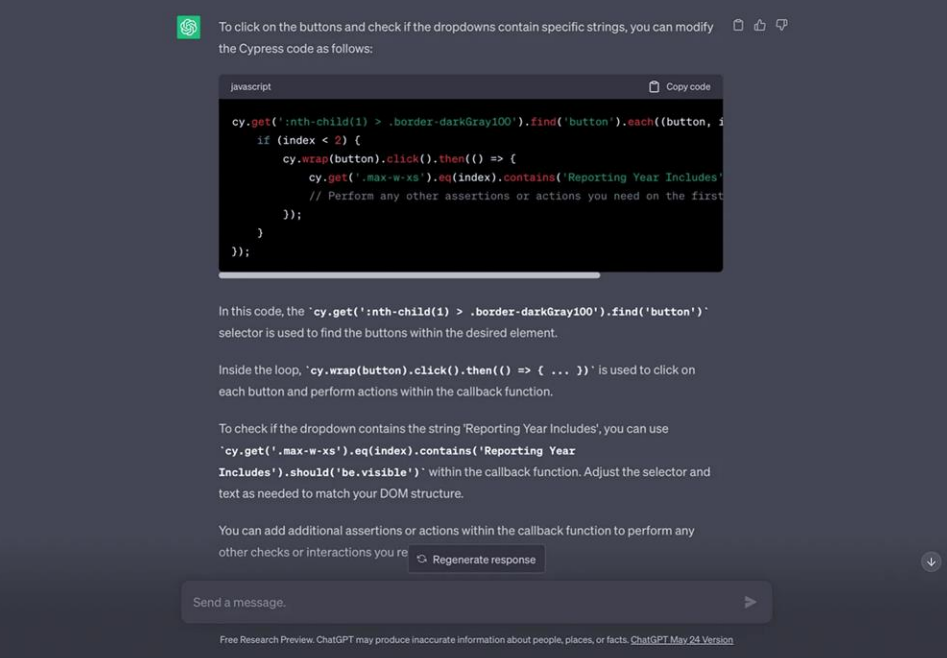
So, you can see for yourself that automation is possible to some extent if the task is clearly defined, understood, and now only a technical check is required, which requires "bulkheading" of different options.
But no matter how much automation gives us, it will not completely replace a person. So, don't worry, if you work as a tester, your salary will not be used to buy a paid account of some AI processor.
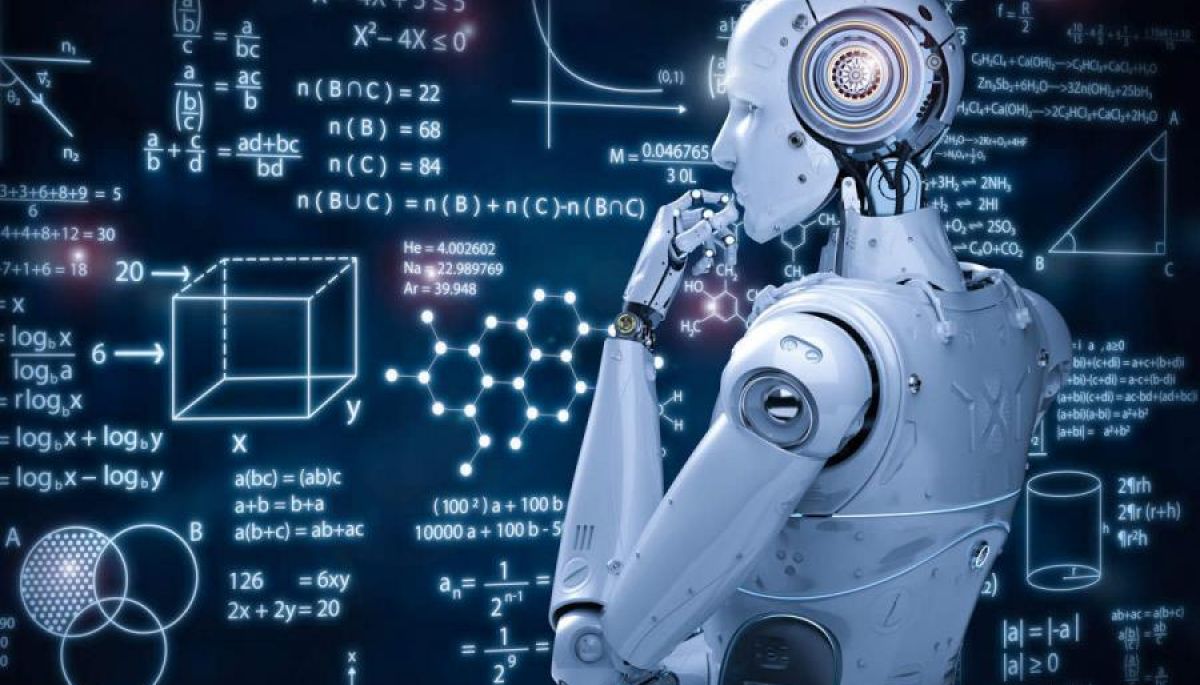
Such important human characteristics and qualities as critical thinking or intuition cannot be replaced by artificial intelligence, no matter how much we want it to be. Therefore, testers can use such technologies only as auxiliary ones and nothing more.
Real cases of AI application in testing on the market
Let us name a few examples, because perhaps only artificial intelligence itself can name them all to advertise itself. Here are a few significant ones:
- Mindfire Solutions uses artificial intelligence to quickly develop new tests and predict what will be needed in the future. It has already become clear that this has significantly contributed to the speed of work in general
- But the Functionize platform (which is probably already known to everyone, because many people cooperate with them) has gone a little further and uses AI to create and manage tests in real time. Now, what used to take hours - 50 or 40 hours in a row - can be done in a matter of hours. And as we "learn", this period will probably be even shorter!"
- The third one is Perforce, because these guys have gone even further. They have outsourced even the forecasting of tests and the development of a strategy for their application to AI. The company assures that this has significantly reduced the number of possible errors and accelerated all processes in general. As you can see, technologies are being actively implemented, although it is probably not yet worth fully trusting them. For example, security and privacy issues in the case of AI are difficult to guarantee. Do you remember the recent dialogue leak? Who knows whether your code will be leaked somewhere where it will be used?
AI and its implementation in development
The situation here is also similar to testing. With the use of artificial intelligence, you can create large code fragments that are purely technical and do not require deep knowledge, but require actual effort and time to complete. After all, they can be handled by a machine. It is becoming more and more common to find online vacancies for AI jobs, even in development, which was once considered bad form. Now it's not quite so clear."
But at the same time, there is a real boom in the use of AI where it is needed and where it is not. As a result, we have already noticed some alarming moments, in particular, that the development process has now turned into a jigsaw puzzle made of fragments written by artificial intelligence.
A bot that helps to create a game with bots
Yes, artificial intelligence is actively used, for example, in game development. Let's give this example because it is very illustrative. If you've ever played computer games, you've probably fought against computer opponents in races, puzzles, shooters, etc.
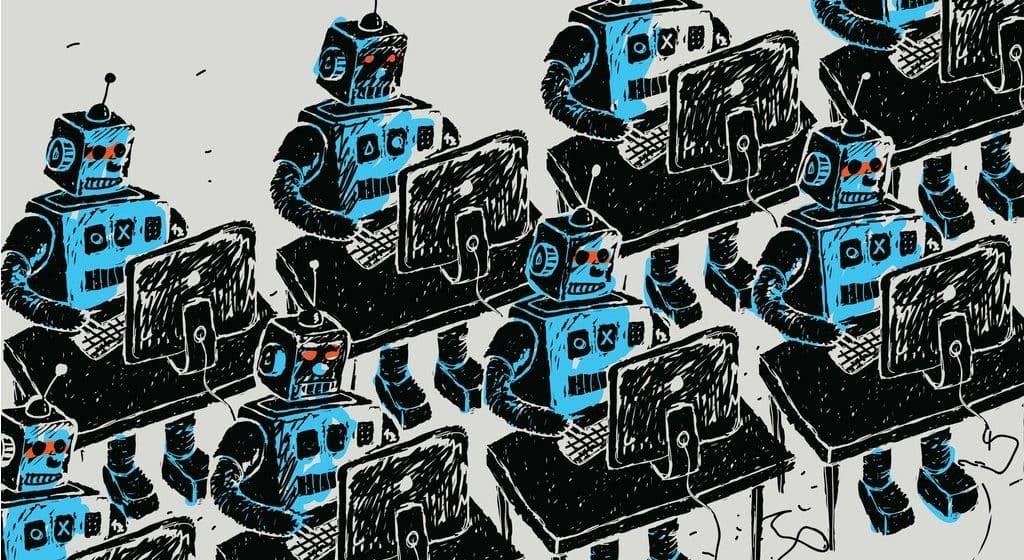
But in fact, bots also help to create games. Besides gameplay, artificial intelligence is used for game development. Here, AI helps in several areas at once:
- Development and testing of levels. For example, bots can walk or drive across the entire game map and detect impassable areas, "stuck" areas, and other nuances so that no one gets stuck in textures later.
- Balance testing For example, you introduce new amendments to the balance or change some characteristics - and you can immediately arrange a battle between two teams of bots to check whether everything is adequate and whether there is a "skew". Besides, a bot can be set to be "medium" in terms of skill and imitate a human, but it is usually difficult and time-consuming to recruit a team of "medium" gamers who are equal in skill to each other.
- Testing new items and skills. For example, you need to check the characteristics of a new car. The developer prescribes a scenario for the bot, and it tests the car in game locations in all possible modes, following the developer's instructions, which is very convenient. Or, for example, a bot can methodically make the same movements to test some nuances or game mechanics.
Examples of AI implemented in development
Two most important projects stand out among the most striking innovations in this sector: DeepCode and OpenAI Codex.
DeepCode, which originated as a startup in Zurich, is an example of the effective use of machine learning for code analysis and optimisation. It analyses the proposed code and can detect any bugs, inaccuracies, or problems in it using its own features for analysis.
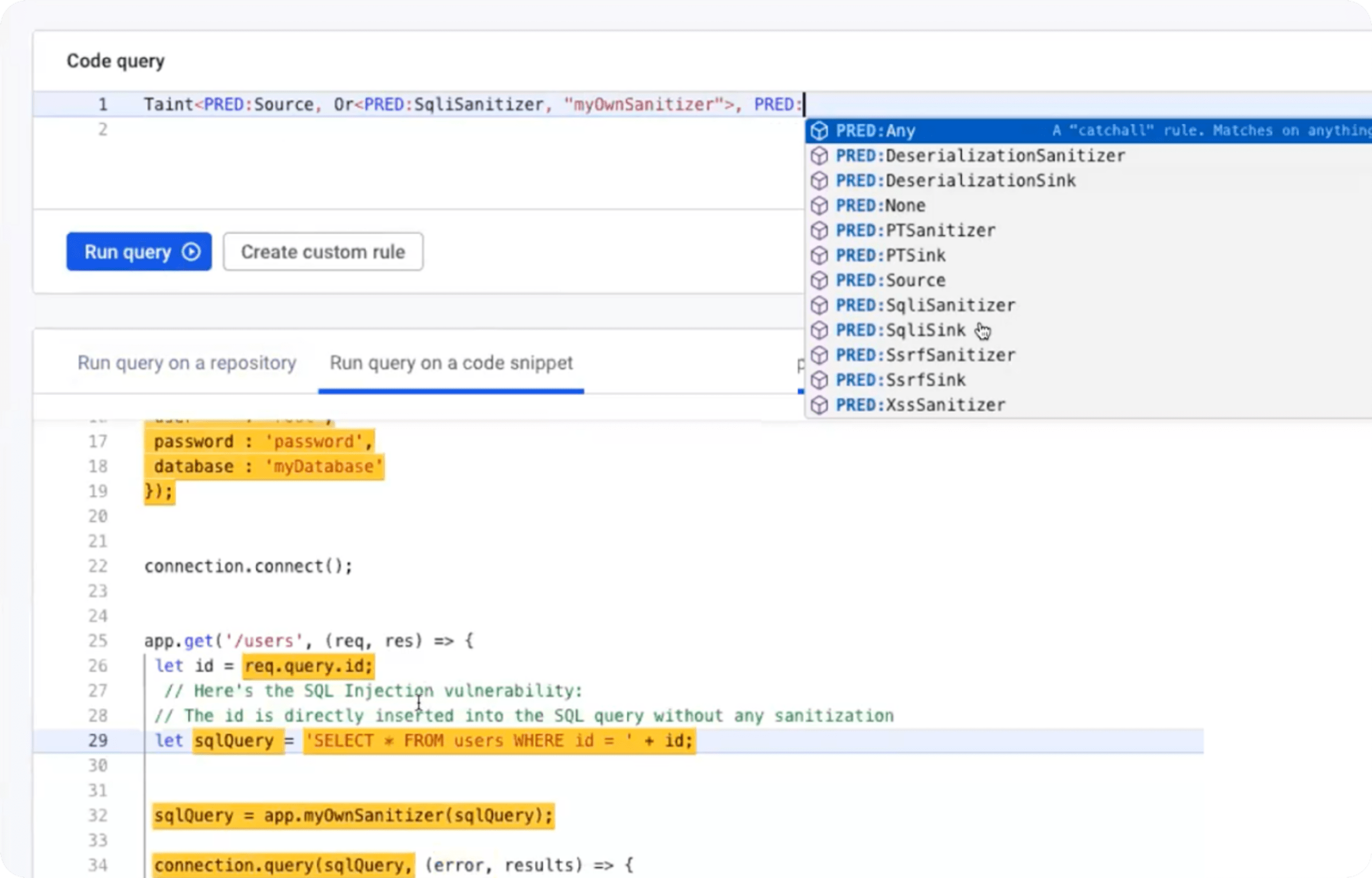
There's no secret here, in fact, people have taught DeepCode to think themselves. The authors have collected a huge database of codes from GitHub and loaded it into the "memory" of this AI monster. Accordingly, it learns from millions of projects, studying both their advantages and mistakes.
The second tool, OpenAI Codex, developed by the well-known leader in this field, OpenAI, can generate code on its own. It is based on GPT-3, so many people may be a little familiar with it if they have had "conversations" with ChatGPT and offered to "add" something to it.
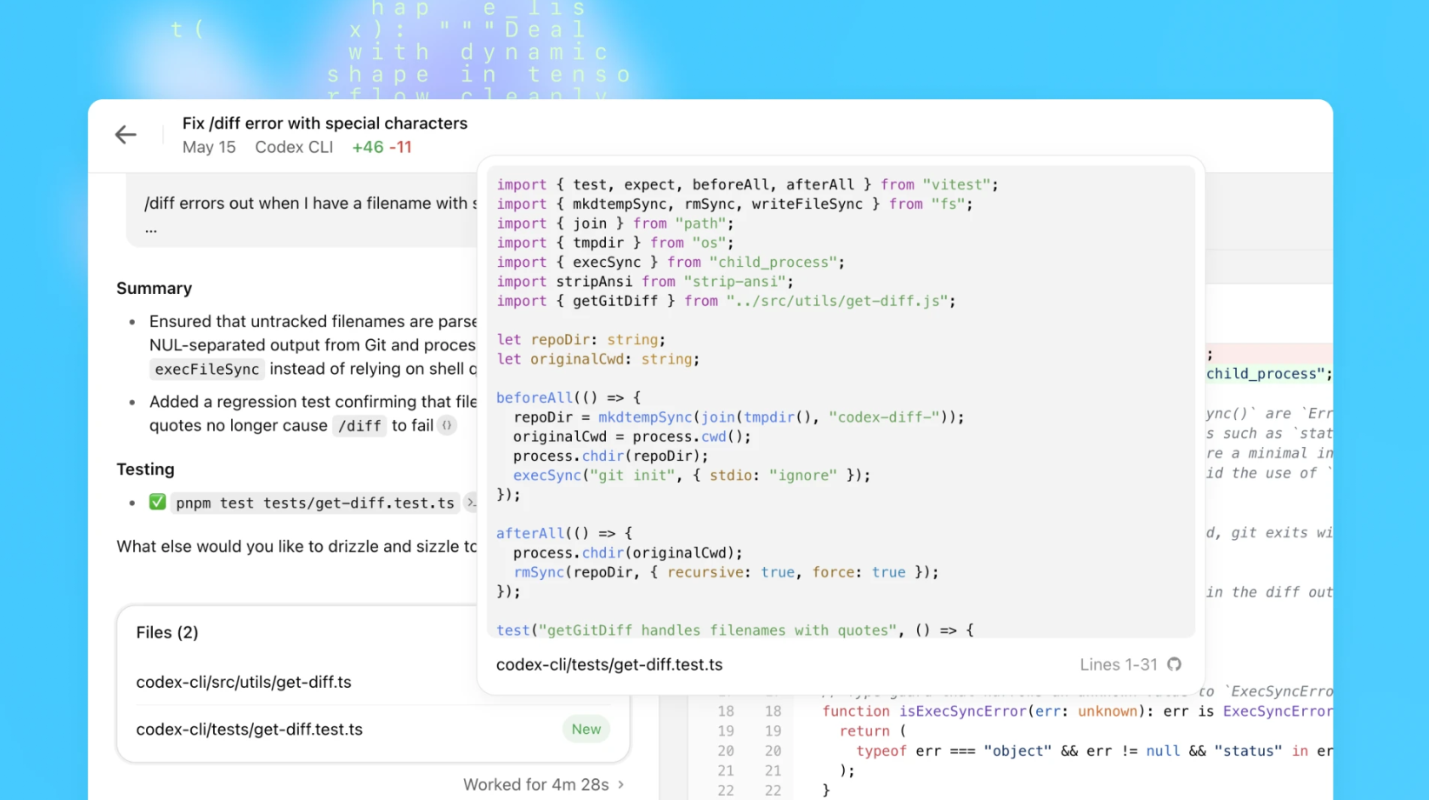
This "electronic brain" has opened up new opportunities not only for "advanced" developers who can simply shorten the writing time and make themselves less busy, but also for inexperienced beginners who were looking for work on the Internet without experience. Codex even helps such people in the process of learning programming, so they can save a lot of money.
Disadvantages of AI assistants for developers
Of course, there are some problems. First of all, it is worth understanding that the machine is completely indifferent to truth or adequacy or convenience. It simply generates further based on whether the previous mechanism works. Therefore, it is hardly possible to develop a full-fledged product based on machine code. Or rather, yes: you can develop it, but a product created by people (albeit with the help of machines) will always beat you in the market. Now, let's move on to the next point:
- A kind of AI addiction also exists. According to statistics, users on GitHub accept about a third of the total volume of codes created by AI assistants. However, it is interesting to note that the longer a user stays on AI services, the more he/she uses them, and the less critical he/she is of their creativity. Various open points, accessibility of payment data or other repositories - all of this does not bother an AI program at all, so if you are developing something more serious than a calculator, you should take it seriously. Don't trust artificial intelligence completely, it's like trusting some deaf gentleman to listen to someone's lecture and then retell it to you. Now companies are actively refusing to hire juniors, because they say "AI will do it faster and cheaper". However, the problem is that an AI assistant will never turn out to be a competent señor, and with this approach, we will face a deep staff crisis in this area in 4-5 or 6 years.
- Generally low code quality. There is a danger that after some time, there will be so much low-quality code created by machines that it will become dominant.
But whatever the case, it is no longer possible to ignore these technologies. Learn programming, and at the same time, learn more about Copilot, Codiga, or Tabnine and be in the trend.