
Of course, being a developer is difficult. Especially when you've never been one! But laughs aside, let's talk about serious things. In fact, there are many different tools that make life easier for a developer and help with various tricks.
The ability to choose the right one for software development is at least one of the key ones. We will go through different areas and aspects and name the most relevant and used tools. Although, of course, this is always subjective, and after reading our material to the end, you will understand why.
Why it is important
In fact, we can talk about this a lot, but we will not bore you and tell you in a thesis and briefly.
- First of all, the development of any software always relies on a wide variety of different tools, each of which has its own specific and clearly defined mission in design.
- The right choice of tool is the key to speed, simplicity, and efficiency. The more correctly you choose the tool, the easier it will be to work later."
So, choosing the right tool is, so to speak, already half the battle. In principle, this is true not only for IT or developers specifically. For example, you need to hang cabinets in your kitchen at home. You won't use a screwdriver to prepare the holes in the wall, but take a perforator, right? The logic here is about the same.
And below we will talk about specific tools, and we will group them by purpose, and not give a banal list, like most authors. We want you to understand what's what and why, and not just provide you with a list of titles with a brief description. However, here's a list for starters, if you like to get acquainted with what is offered to you first:
- Microsoft Visual Studio
- IntelliJ IDEA
- React
- Angular
- Vue.js
- Python
- Java
- Swift
- Kotlin
- GitHub Copilot
Integrated development environments and what they are used for
Speaking specifically about development, integrated development environments (IDEs) can be described as a kind of repository where ideas turn into reality. Everything you need is gathered there at once, and you can both create and test it, i.e. go through several stages of the project at once.
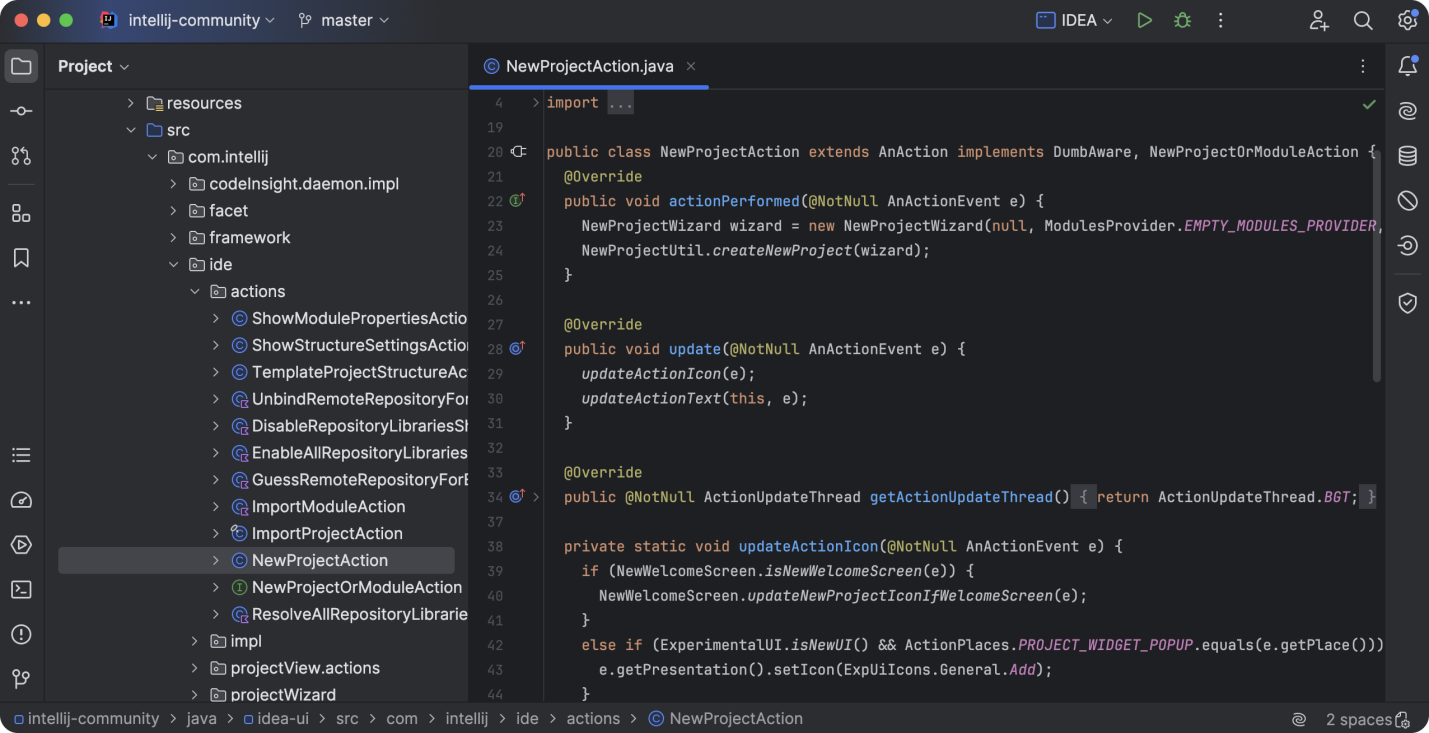
Among the most popular and used IDEs today, we can mention Microsoft Visual Studio and IntelliJ IDEA. Both of them already know how to check your "creativity" and quickly correct small mistakes. Interestingly, they already work with different programming languages. You can also add other extensions that you need in individual cases. That's why IDEs are the base, the foundation, the basis - whatever you want to call it, but without them, you won't be able to do anything at all.
If you use these environments skilfully, you can significantly improve the development workflow, allowing developers to focus on real DEVELOPMENT, rather than getting stuck on mundane or utilitarian issues.
Front-end and frameworks
When we talk about front-end development, it is, first of all, the implementation of any thoughts at the design stage into life and bringing them to reality. Frameworks such as React, Angular, and Vue reign supreme in this world. Those who work in teams will especially appreciate Angular.
That's because it's free, open source, and comes with TypeScript out of the box, making it easy to work with large projects. Built-in tools like the Angular CLI speed up your start, and two-way binding saves time on synchronisation. The community is large, the documentation is detailed, but it can be difficult for beginners due to the multitude of concepts.
If we consider the diverse and interesting world of front-end tools, we should first of all note the emergence of Svelte and Next.js, which signal new trends. They are simple, do not require unnecessary complexity and work faster than many others. The code is compact, but the community and ecosystem are still small. This is great for startups and applications where speed is important.
Backend and programming languages
The name came about for a reason. Usually, this part of projects remains invisible. However, it is the backend that makes up all the power and "life" of software applications, where servers, databases, and everything else are combined to create a set of digital services.
Well-known languages such as Java, PHP, and Python are the backbone of backend development. Each of these languages offers a unique set of features. Java continues to be a recognised leader in the corporate sphere, but when we talk about the world of scripts and servers, we will primarily talk about PHP. And the notorious Python, like a real snake, has already crept into almost all areas of development where it is not used.
But there is something new here too.For example, the Go programming language, which is now rapidly gaining popularity, is evidence of the evolutionary nature of backend development. Its advantages are productivity and ease of learning. Not enough examples of new things? Then let's remember Node.js, which has revolutionised the use of JavaScript on the server side. It has opened up new possibilities for web applications and servers.
The world of mobile development
The direction of mobile application development is currently one of the main and quite popular, and, of course, like others, it has its recognised "authorities" in the world of tools. Perhaps no one will argue that Swift for iOS and Kotlin for Android are the main programming languages. Of course, this also means that they have certain peculiarities.

The ease of learning and using Swift greatly speeds up the development process for iOS, as well as the unity of devices. But developers of Android versions have to solve the additional task of ensuring compatibility on different devices from different manufacturers, both well-known and not so well-known.
Hybrid frameworks for application development, such as Flutter and React Native, help the latter to do this. Thanks to them, products can be successfully launched and run on any phone or tablet that are united only by the code base.
Artificial Intelligence-based tools
In general, there is a certain madness on the topic of AI and its application. People are trying to "hide" it where it is needed and where it is not, but in reality, no one can do without it. The developer world has not been spared either, with a fairly powerful tool with AI elements.
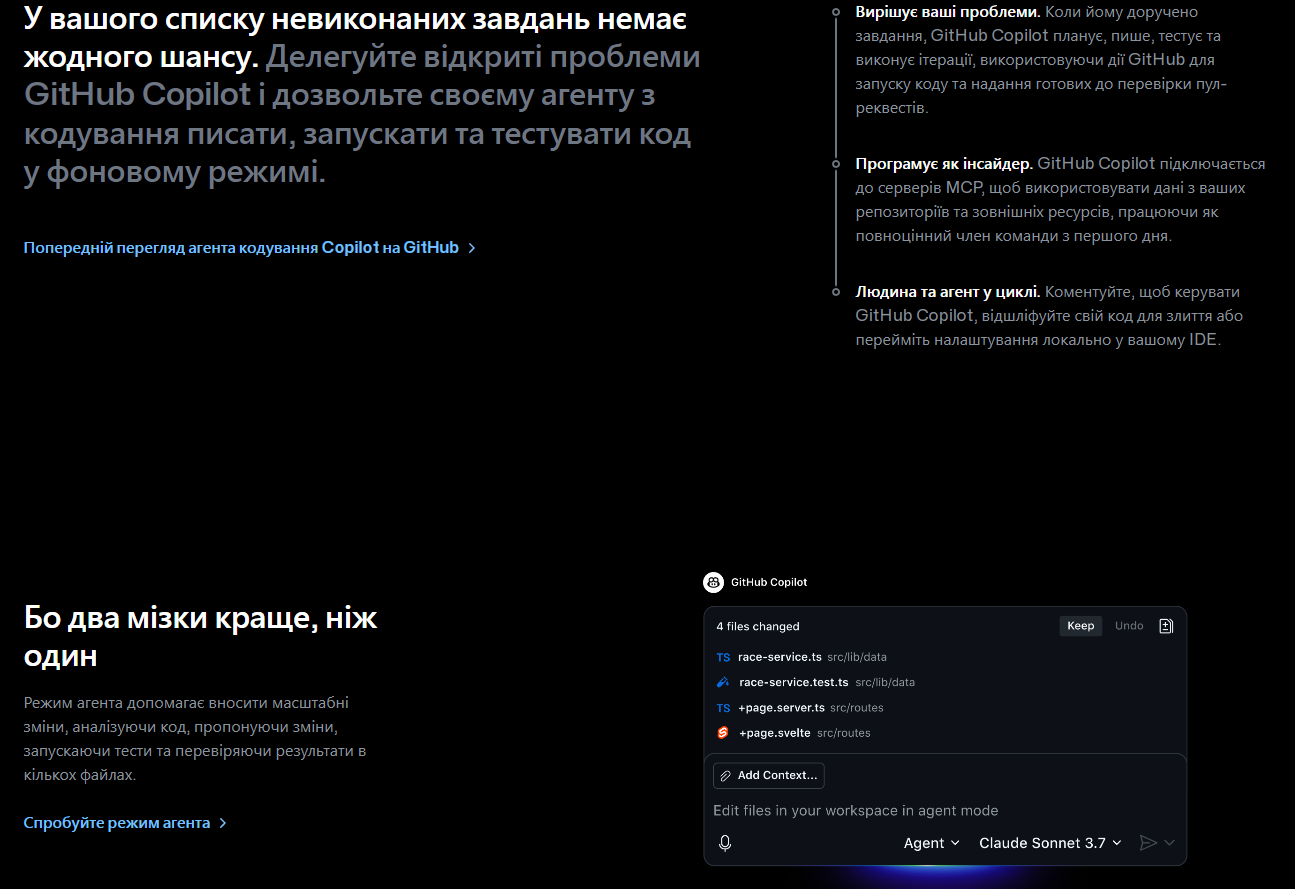
We are talking about GitHub Copilot. It was created on the basis of OpenAI Codex, the developer of which, we think, is already clear. The function of this tool is to provide code suggestions and auto-completion, which speeds up the coding process.
In simple terms, Copilot can offer the user ready-made individual functions, or even define a "style" and offer a whole ready-made fragment. In principle, this is a very useful feature, because it allows you not to waste time and effort on some template coding, let the machine do the rough work!
Copilot is already actively integrated into various development environments, for example, it is already available in Visual Studio Code. However, of course, you still need to check it, and don't think that it will do everything for you while you drink your coffee.
What about those who are not on the list, but are also important
For example, we cannot but mention the need for your product to be compatible in different browsers. Accordingly, all this business needs to be checked.
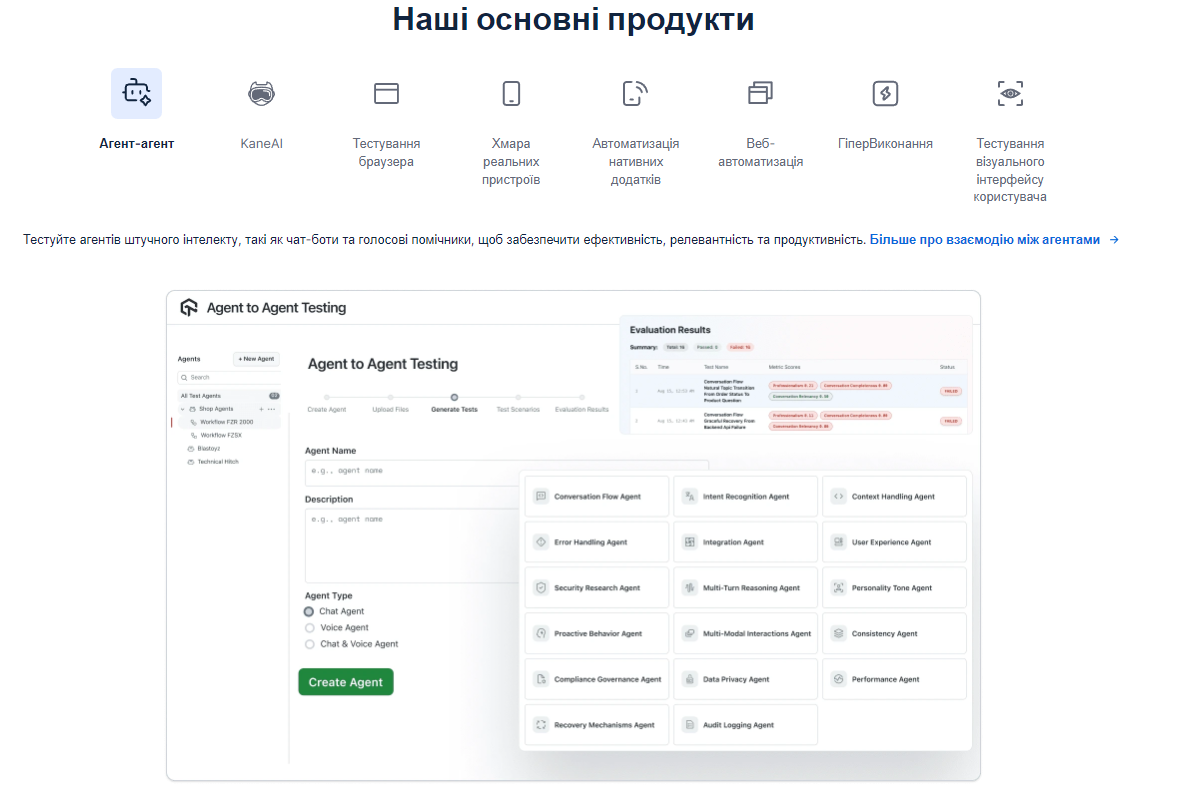
And LambdaTest's feature is its cloud to test your product, as well as take screenshots and fix bugs that may appear during testing. It is very convenient, isn't it? And let's not forget about automated cross-browser testing. Selenium is an iconic player in this field."
Of course, we shouldn't forget about DevOps. Jenkins and TeamCity, for example, automate code integration, while Docker and Azure DevOps perform the function of containerisation. It allows you to deploy and run projects in isolated environments.
As for databases, there are also proven classics here. For example, PostgreSQL is a fairly powerful free and open-source database that is suitable for analysing and processing data in complex projects. It works with different types of data, such as SQL and JSON.

And for beginners, for example, MySQL is a great choice. This database is well suited for small and medium-sized projects. It has a free version, and it works easily with languages like PHP, Python, and Node.js."
Tips for choosing the right tool
So how do you choose the right one, since the market is so big? First of all, rely on the existing experience in the team. If you have never worked with something at all, this is a reason to think about it and maybe choose something else.
If you still want to try something, but have doubts, then it makes sense to try free trial versions to see if the tool is suitable for your project.
That is, your choice should be based primarily on a sober assessment of the tool, not its popularity, novelty, or capabilities. It is worth trying it and deciding whether it is right for you. The consequences of your decision will affect not only the development itself, but also the financial part of the entire project, and therefore this decision will be, so to speak, strategic. So, make it right!